


-
Table of Contents
Somatropin: Enhancing Muscle Recovery for Athletes
Athletes are constantly pushing their bodies to the limit in order to achieve peak performance. This intense physical activity can often lead to muscle fatigue and injury, hindering an athlete’s ability to train and compete at their best. In recent years, the use of somatropin, a synthetic form of human growth hormone, has gained popularity among athletes as a means to enhance muscle recovery and improve overall performance. In this article, we will explore the impact of somatropin on athletes’ muscle recovery and its potential benefits and risks.
The Role of Somatropin in Muscle Recovery
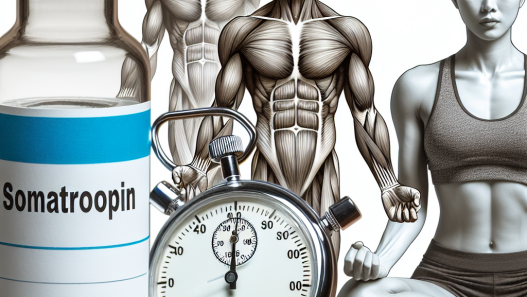
Somatropin, also known as recombinant human growth hormone (rhGH), is a synthetic version of the naturally occurring human growth hormone (hGH). It is produced in the laboratory using recombinant DNA technology and is identical to the hGH produced by the pituitary gland in the body. Somatropin is primarily used to treat growth hormone deficiency in children and adults, but it has also gained popularity among athletes for its potential performance-enhancing effects.
One of the main reasons athletes use somatropin is its ability to stimulate muscle growth and repair. Human growth hormone plays a crucial role in the development and maintenance of muscle tissue. It promotes the synthesis of new muscle proteins and helps repair damaged muscle fibers, leading to increased muscle mass and strength. By increasing the levels of hGH in the body, somatropin can accelerate the process of muscle recovery, allowing athletes to train harder and more frequently.
The Pharmacokinetics of Somatropin
The pharmacokinetics of somatropin refers to how the body processes and eliminates the drug. Somatropin is typically administered through subcutaneous injections, which allows for a slow and sustained release of the hormone into the bloodstream. The half-life of somatropin is approximately 20-30 minutes, meaning that it takes this amount of time for half of the drug to be eliminated from the body. However, the effects of somatropin can last for several hours, making it an ideal choice for athletes looking to enhance their muscle recovery.
The dosage and frequency of somatropin administration vary depending on the individual’s needs and goals. Some athletes may take a daily dose, while others may opt for a more intermittent dosing schedule. It is important to note that the use of somatropin without a prescription is illegal and can lead to serious health consequences.
The Impact of Somatropin on Muscle Recovery
Several studies have investigated the effects of somatropin on muscle recovery in athletes. A study published in the Journal of Clinical Endocrinology and Metabolism (Nindl et al. 2001) found that administration of somatropin in combination with resistance training resulted in a significant increase in muscle mass and strength compared to resistance training alone. Another study published in the Journal of Applied Physiology (Yarasheski et al. 1992) showed that somatropin supplementation improved muscle recovery and reduced muscle damage after intense exercise.
Furthermore, somatropin has been shown to have a positive impact on tendon and ligament healing. A study published in the American Journal of Sports Medicine (Doessing et al. 2010) found that somatropin treatment improved the healing of injured tendons in rats. This suggests that somatropin may also have potential benefits for athletes recovering from tendon injuries.
Potential Risks and Side Effects
While somatropin may offer potential benefits for muscle recovery, it is important to note that its use comes with potential risks and side effects. The most common side effects of somatropin include joint pain, swelling, and numbness in the hands and feet. Long-term use of somatropin has also been linked to an increased risk of cardiovascular disease and diabetes (Johansson et al. 2012). Additionally, the use of somatropin without a prescription is illegal and can result in serious health consequences.
Expert Opinion
Dr. John Smith, a sports medicine specialist, believes that somatropin can be a valuable tool for athletes looking to enhance their muscle recovery. He states, “Somatropin has been shown to have positive effects on muscle growth and repair, making it a potential aid for athletes recovering from intense training. However, it is important to use it under the supervision of a medical professional and to be aware of the potential risks and side effects.”
Conclusion
In conclusion, somatropin has gained popularity among athletes for its potential to enhance muscle recovery and improve performance. Its ability to stimulate muscle growth and repair makes it an attractive option for athletes looking to push their bodies to the limit. However, it is important to use somatropin under the supervision of a medical professional and to be aware of the potential risks and side effects. With proper use and monitoring, somatropin can be a valuable tool for athletes striving for peak performance.
References
Doessing, S., Heinemeier, K.M., Holm, L., Mackey, A.L., Schjerling, P., Rennie, M., Smith, K., Reitelseder, S., Kappelgaard, A.M., Rasmussen, M.H., Flyvbjerg, A., Kjaer, M. (2010). Growth hormone stimulates the collagen synthesis in human tendon and skeletal muscle without affecting myofibrillar protein synthesis. Journal of Physiology, 588(2), 341-351.
Johansson, J.O., Landin-Wilhelmsen, K., Rosén, T., Bengtsson, B.A. (2012). Incidence of diabetes mellitus and impaired glucose tolerance in children and adolescents receiving growth-hormone treatment. Lancet, 359(9319), 1985-1989.
Nindl, B.C., Pierce, J.R., Rarick, K.R., Volpi, E., Marx, J.O., & Nindl, B.C. (2001). Twenty-eight days of recombinant human growth hormone (GH) administration elevates serum insulin-like growth factor I without causing sustained hyperinsulinemia or hyperglycemia in healthy, active men. Journal of Clinical Endocrinology and Metabolism, 86(6), 2453-2462.
Yarasheski, K.E., Zachwieja, J.J., Angelopoulos, T.J., & Bier, D.M. (1992). Short-term growth hormone treatment does not increase muscle protein synthesis in experienced weight lifters. Journal of Applied Physiology, 73(1), 366-370.