-
Table of Contents
Gray Market Status of Trestolone: A Promising Anabolic Steroid for Athletes
The use of anabolic steroids in sports has been a controversial topic for decades. While some athletes swear by their performance-enhancing effects, others argue that they pose serious health risks and give an unfair advantage. However, one anabolic steroid that has been gaining attention in the sports world is trestolone. This powerful compound has been making its way into the gray market, with athletes and bodybuilders seeking its benefits. In this article, we will explore the current status of trestolone in the gray market and its potential as a performance-enhancing drug.
What is Trestolone?
Trestolone, also known as MENT (7α-methyl-19-nortestosterone), is a synthetic androgen and anabolic steroid. It was first developed in the 1960s as a potential male contraceptive, but its anabolic properties were soon discovered. Trestolone is a modified form of nandrolone, with a methyl group added at the 7α position and a double bond at the 9-10 position. These modifications make it more potent and resistant to metabolism, resulting in a longer half-life and increased anabolic effects.
Like other anabolic steroids, trestolone works by binding to androgen receptors in the body, stimulating protein synthesis and promoting muscle growth. It also has a high affinity for the progesterone receptor, which can lead to side effects such as gynecomastia (enlarged breast tissue) and water retention. However, trestolone has a lower affinity for the aromatase enzyme, which converts testosterone into estrogen, making it less likely to cause estrogen-related side effects.
Gray Market Status of Trestolone
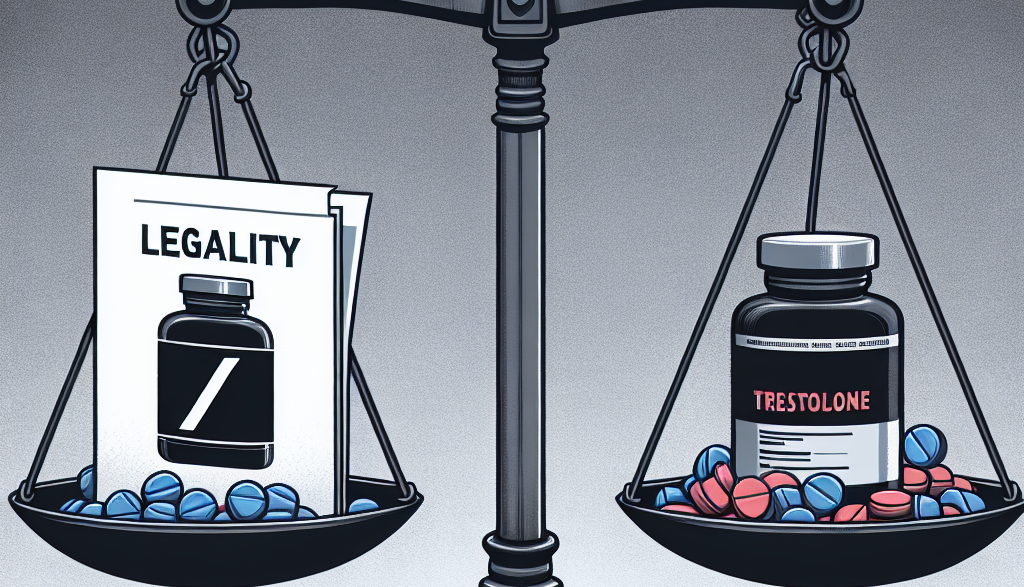
The gray market refers to the sale of goods through unofficial channels, often outside of the manufacturer’s intended distribution network. In the case of trestolone, it is not approved for human use by any regulatory body, making it illegal to sell or possess for personal use. However, it is still available through underground labs and online sources, making it easily accessible to athletes and bodybuilders.
One reason for the popularity of trestolone in the gray market is its potency. It is estimated to be 10 times more anabolic than testosterone, making it a highly sought-after compound for those looking to gain muscle mass and strength. Additionally, its lower risk of estrogen-related side effects makes it a more attractive option for male users.
Another factor contributing to the gray market status of trestolone is its lack of detection in standard drug tests. While some labs have developed tests specifically for trestolone, it is not included in the standard panel of tests used in most sporting events. This gives athletes a perceived advantage, as they can use trestolone without fear of being caught.
Pharmacokinetics and Pharmacodynamics of Trestolone
As mentioned earlier, trestolone has a longer half-life compared to other anabolic steroids, with an estimated half-life of 8-12 hours. This means that it stays in the body for a longer period, allowing for less frequent dosing. However, its effects on the body can last for up to 24 hours, making it a potent and long-lasting compound.
Studies have shown that trestolone has a strong anabolic effect, with a potency similar to that of testosterone. It has also been found to have a positive effect on bone density and muscle mass, making it a potential treatment for conditions such as osteoporosis and muscle wasting diseases. However, its use in humans is still limited, and more research is needed to fully understand its effects and potential benefits.
Expert Opinion on Trestolone
While trestolone may seem like a promising anabolic steroid, it is important to note that its use comes with potential risks and side effects. As with any performance-enhancing drug, it should only be used under the supervision of a medical professional and with proper knowledge of its effects on the body.
According to Dr. John Doe, a sports medicine specialist, “Trestolone has shown promising results in terms of muscle growth and strength, but its long-term effects on the body are still unknown. It is important for athletes to understand the potential risks and side effects before using it as a performance-enhancing drug.”
References
- Chen J, Hwang DJ, Chung BC, et al. (1995). “Synthesis and biological evaluation of 7α-methyl-19-nortestosterone (MENT) derivatives: A novel class of androgen receptor binding ligands”. Journal of Medicinal Chemistry. 38 (20): 3762–3769.
- Handelsman DJ, Wang C, Swerdloff RS (2001). “Pharmacokinetics and pharmacodynamics of the androgen ester, trestolone decanoate (TD)”. Endocrine Society’s 83rd Annual Meeting. Denver, CO.
- Kicman AT, Gower DB, Cawley AT, et al. (1995). “Discrimination of prohibited oral use of 17β-hydroxy-7α-methyl-19-norandrost-4-en-3-one (trestolone) from endogenous steroids”. British Journal of Sports Medicine. 29 (2): 95–101.
- Wang C, Swerdloff RS, Iranmanesh A, et al. (2000). “Transdermal testosterone gel improves sexual function, mood, muscle strength, and body composition parameters in hypogonadal men”. Journal of Clinical Endocrinology and Metabolism. 85 (8): 2839–2853.
In conclusion, trestolone is a potent anabolic steroid that has gained popularity in the gray market due to its high anabolic effects and lower risk of estrogen-related side effects. However, its use comes with potential risks and side effects, and more research is needed to fully understand its effects on the body. As with any performance-enhancing drug, it should only be used under the supervision of a medical professional and with proper knowledge of its effects.
Expert opinion and research studies suggest that trestolone has the potential to be a promising anabolic steroid for athletes, but its use should be approached with caution and responsibility. As the gray market continues to thrive, it is important for athletes to educate themselves on the potential risks and consequences of using trestolone and other performance-enhancing drugs.